Imagine that you board a plane and fly to India, when you arrive you catch a train out of the city towards the more rural regions, then you hop on a bus and finally arrive at a small mountain village. The people stare at you strangely, wondering what a foreigner is doing in their village. You then proceed to share the Gospel in fluent English, a perfect articulation of 2 ways to live… The villagers continue to stare. You’d be crazy right? To share the gospel with those people you’d need to speak in their language, you’d need to communicate with them.
We often think of cross cultural communication like Google Translate:
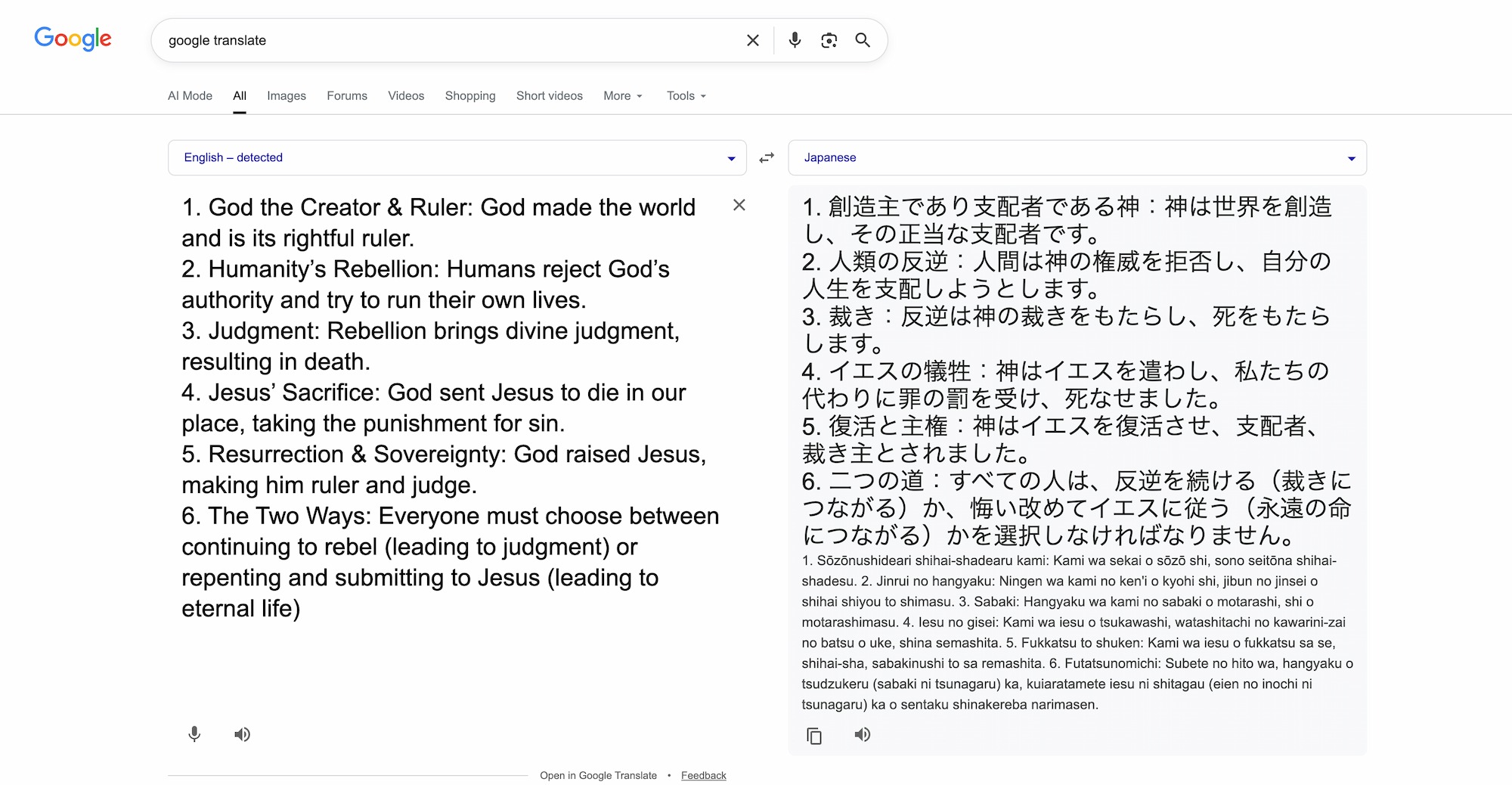 As thought all we’d need to do in the above scenario is translate 2 ways to live into their language and give them a pamphlet…
However communication is much more than just words. Communication involves culture & context, building on your shared understanding. Words are the primary medium through which communication happens, but the communication is built on & relates to the culture & context around you and those with whom you’re speaking.
Consider trying to explain how to correctly use technology to your grandparent. You both speak the same language fluently, yet communicating the simplest of instructions can prove infuriating. The same can be true of sharing the Gospel: even though you may speak the same language as your audience, there are often many remaining barriers to communicating it across cultures effectively.
Consider how even though Jesus spoke the same language as the people around him, he also employed farming & labouring metaphors when speaking with the common people, stories that they’d understand. Much of the bible (~three quarters) is narrative, the Gospels are also primarily narrative full of Jesus’ analogies & parables. Yet we often explain the Gospel using logical propositions: presenting it as a series of true statements (e.g., “God is holy,” “Man is sinful,” “Jesus died for sin”).
I remember working with a brilliant copywriter in a previous job. She would passionately teach us, her colleagues, how to improve our writing & communication. The lesson of hers that has stayed with me over the years is the power of storytelling. Framing what you want to communicate through a story can capture the hearts & emotions of those who hear; stories are more memorable, they’re more effective at moving hearts than facts alone. We empathise with the protagonist’s struggles and rejoice in their success.
Rather than presenting the Gospel in your own language & culture, consider the context & culture of your audience. If your goal is for them to hear the gospel, then first they’ll need to understand what you’re saying.
To the Jews I became as a Jew, in order to win Jews. To those under the law I became as one under the law (though not being myself under the law) that I might win those under the law. To those outside the law I became as one outside the law (not being outside the law of God but under the law of Christ) that I might win those outside the law. To the weak I became weak, that I might win the weak. I have become all things to all people, that by all means I might save some. I do it all for the sake of the gospel, that I may share with them in its blessings.
1 Corinthians 9:20-23
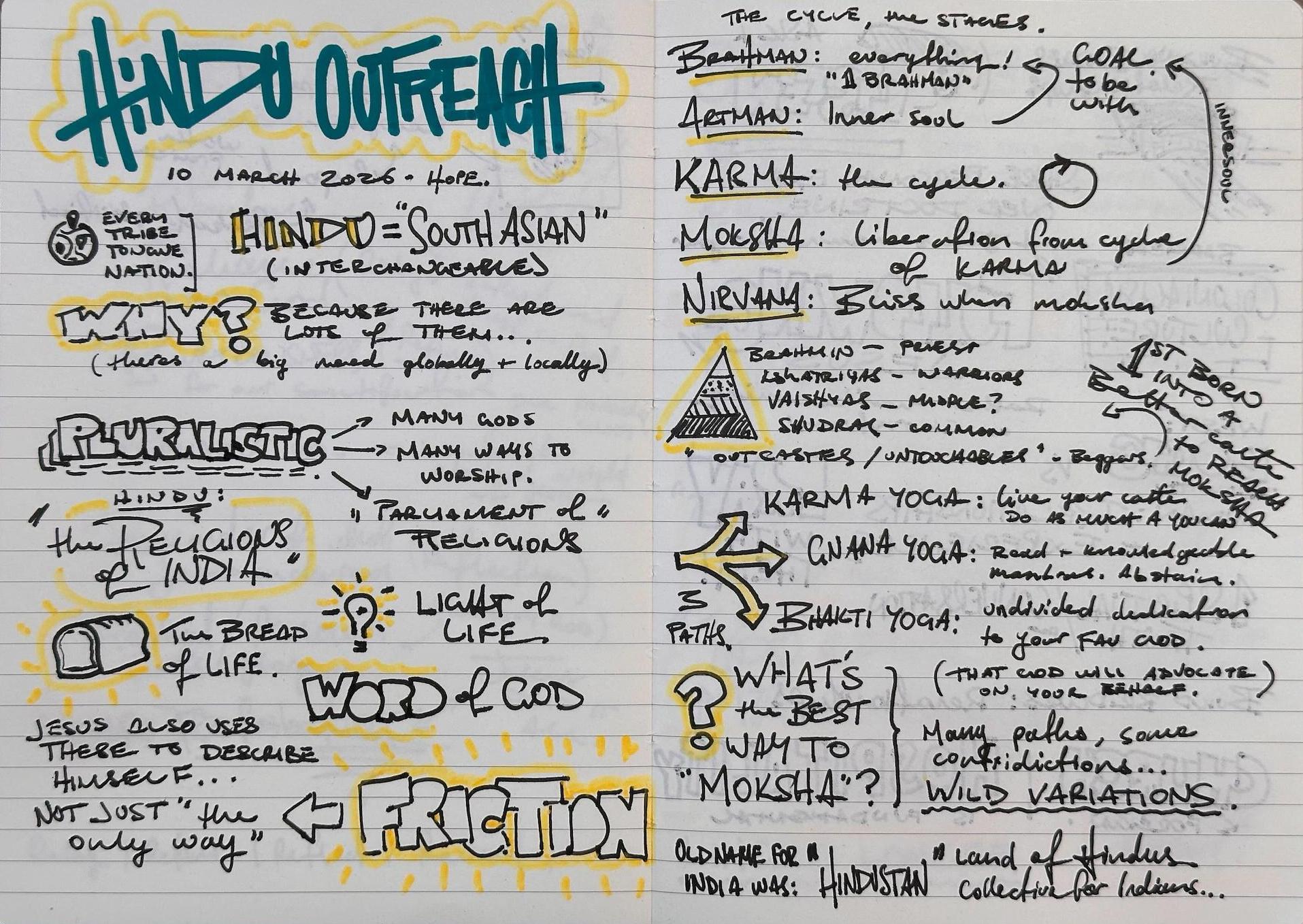
Here are some notes I took at a recent event about how to communicate with people of a South Asian background: